Cell Division
Question 1
Question 1:
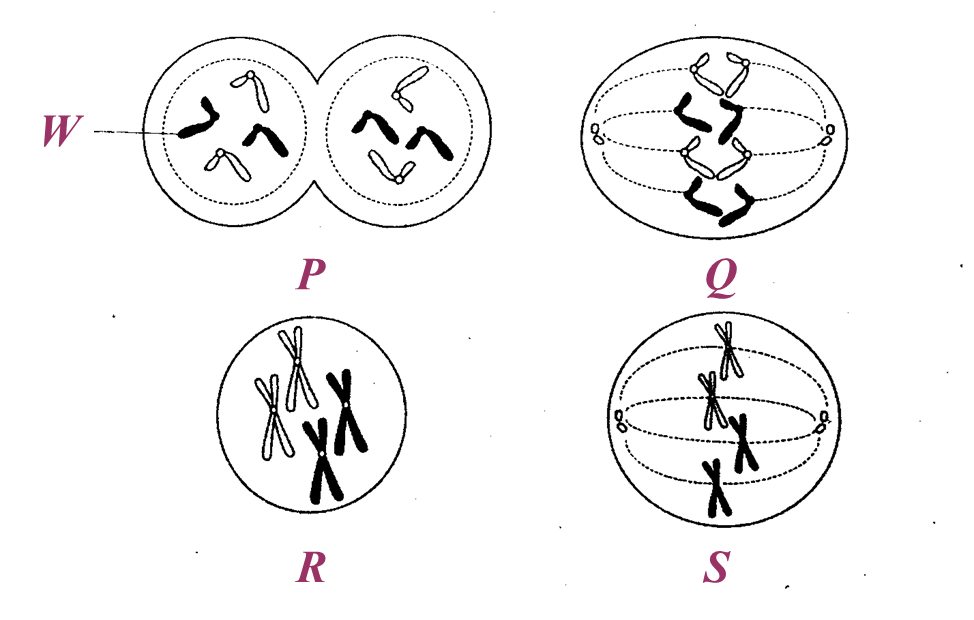
Diagram 1 shows the stages of cell division.

(a)(i) (1 mark)
Name the type of cell division as shown in Diagram 1. [1 mark]
(ii) (1 mark)
Give reason to your answer in (a)(i). [1 mark]
(b) (1 mark)
Arrange the stages of cell division P, Q, R and S in a correct sequence in the boxes given. [1 mark]
(c)(i) (1 mark)
Name structure W. [1 mark]
(ii) (1 mark)
How many structures W in each cell at stage P? [1 mark]
(d) (1 mark)
What happens to structure W if exposed to radioactive radiation? [1 mark]
Answer
(a)(i) Mitosis
(a)(ii) The daughter cells contain the same number of chromosomes as the parent cell.
(b)
(c)(i) Chromosome
(c)(ii) 46
(d) Mutation may occur
Question 2
Question 2:
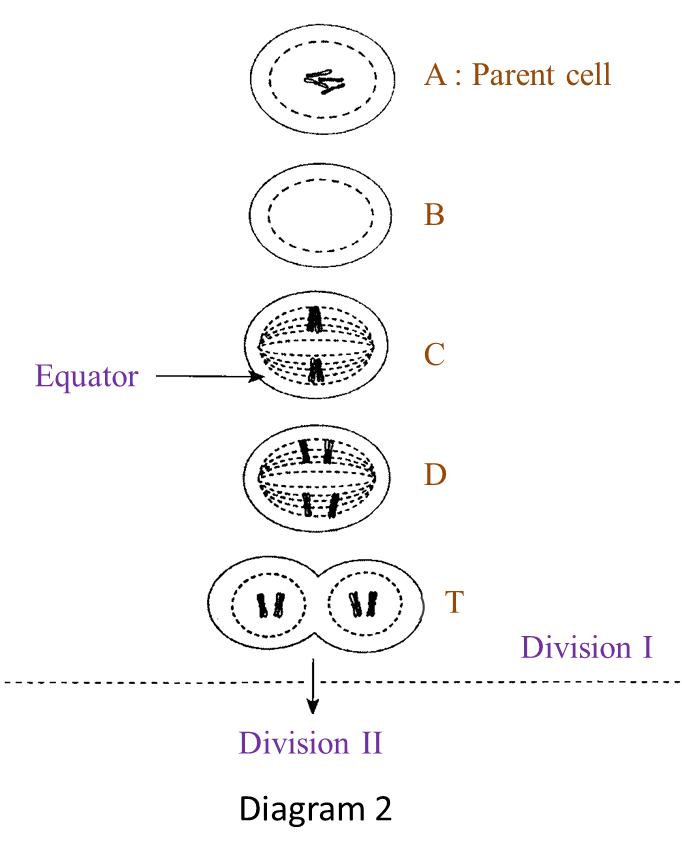
Diagram 2 shows a process of cell division. Chromosomes at stage B are not shown.
(a)(i) (1 mark)
Name the process shown in Diagram 2. [1 mark]
(ii) (1 mark)
State the importance of the process in (a)(i). [1 mark]
(b)(i) (1 mark)
During stage C, the chromosomes line up on the equator.
What happens to the chromosomes during this stage? [1 mark]
(ii) (1 mark)
What is the effect of the process in (b)(i) on the offspring? [1 mark]
(c) (1 mark)
In Diagram 2, draw the chromosome at stage B. [1 mark]
(d) (1 mark)
How many daughter cells are produced at the end of Division II in Diagram 1? [1 mark]
Answer
(a)(i) Meiosis
(a)(ii) Production of gametes
(b)(i) Crossing-over
(b)(ii) Variations
(c)
(d) 4 daughter cells are produced